3 Lessons in Rapid Prototyping with Stanford d.school

How do you build a humane gopher trap?

What does a lawn chair designed for senior citizens look like?

How would you create a tool to teach kids algebra?

Stanford d.school professor Michael Dearing presented these questions to Flite when he visited our San Francisco office this week to talk about rapid prototyping.

This concept is one of the design philosophies of IDEO founder David Kelley and the renowned Stanford d.school.

The core idea is to "think with your hands" by building and testing ideas. Sometimes the planning phase of a project gets bogged down with long brainstorming session, meetings, and emails deliberating pros and cons.

By contrast, rapid prototyping focuses on action. Planning is important but planning by doing is even better. By building something concrete and putting perfection aside, you can iterate and keep improving with each revision.
 

To Go Beyond Selling Audience, Sell it Yourself

It’s a sad but true fact: online publishers have been forced into a model of selling pure audience.

Okay, audience is a huge factor — no question there.

But frankly, some sites do a nicer job with their ads. The placement is smarter. The integration with the site is smoother. Advertisers are going to get more of a bang for their buck running ads on these sites.

And some publishers offer great content. They should have a market edge too. When content invigorates the mind, or opens up consumer’s interest in discovering new products and ideas, ads will do better as well.

Yet somehow, a 25-35 male is just a 25-35 male.

Embedding Facebook in Display (Banner) and Mobile Ads

An expansion of a mobile ad banner that shows the most recent 20 Facebook posts.Facebook is the world's largest social network, with over a billion active users (and the only social network profiled in an award-winning blockbuster movie, released when its userbase was only half as large). And with over 50 million Pages, Facebook has also moved well past friend-to-friend interactions. Along with Twitter, Facebook has become one of the mission-critical social media platforms for brands to interact with fans, kick off promotions, and make announcements that have the potential to spread virally.

As I discussed in my blog post last week, embedding social media in display (banner) ads offers users the opportunity to do more than click and interrupt their site browsing experience. It also offers brands the opportunity to share the kind of content that was valuable enough to post on their Facebook Pages with a potentially much larger audience, one that is practically only limited by budget.

They Weren’t Mistakes If You Learned From Them

Source: Miss Pupik (Flickr)Ever have a bad idea? In marketing, that’s pretty much an occupational hazard.

Maybe that’s why I sometimes hear stories of campaigns that perform just terribly. Every so often I’m the one telling those stories.

But if we listen and learn, every failed campaign should lead us closer to success. Of course, it’s always preferable to fail fast, or better yet, not fail at all.

That’s why watching campaigns launch in real-time is so effective. It shortens the feedback loop, creating more opportunities to learn and optimize, or pull the plug. Real-time monitoring also let’s you know if you’ve struck gold and it’s time to ramp up your campaign and bet big while it's hot.

I hear these stories too, of agile marketers with their real-time data. When a campaign isn’t going well, they go on a hunt for a solution. A content change here. A new message there.

And by introducing optimization early and often, agile marketers might double, triple, even decuple (x10 — I had to look that up) the results of their efforts. Or maybe they terminate the project early to save budget for better ideas.

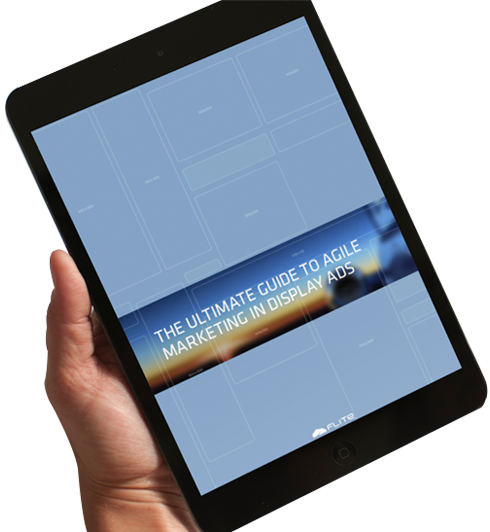
New eBook: THE ULTIMATE GUIDE TO AGILE MARKETING IN DISPLAY ADS

We're excited to share our new eBook called THE ULTIMATE GUIDE TO AGILE MARKETING IN DISPLAY ADS. In this 15-page eBook, we review everything you need to know to use agile marketing to power your display advertising.

Topics covered:

  • Benefits of agile marketing
  • Potential pitfalls for agile marketers
  • How an agile approach helps overcome banner blindness
  • Best practices for what makes a good display ad
  • Real examples of agile display advertising by startups and Fortune 500 companies

Download the eBook here.

Embedding Twitter in Display (Banner) and Mobile Ads

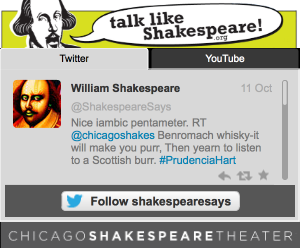
Some like to tweet sonnets.Twitter Popularity

Today marks the seventh anniversary of the world’s first tweet, posted by founder Jack Dorsey. With 200 million users posting 400 million tweets a day, the platform shows no signs of slowing down and is the medium of choice for microblogging and concise broadcasts. The platform has also proliferated a number of popular innovations like retweets and hashtags, essential elements of today’s social media lexicon.

Although tweets are notorious for their sometimes awkward-sounding abbreviations and inscrutable lingo, online users readily understand and digest them and their brevity prevents the dreaded TL;DR appellation that would guarantee their scorn.

Why Influence Matters Online - Guest Post By Don Hoang, Klout

Think about every decision you’ve ever made: where to eat for dinner, what type of skis to buy, what movie to watch, what to do in a new city.

Chances are someone influenced you to make that decision. 

Influence Shifting Online

10 years ago, a telephone call with a friend, watching a commercial on TV, reading a review in the paper would be normal ways to receive information. You would rely on this information to help make your decisions. More importantly, if this information came from a trusted source, a friend or expert, you were more likely to act on that information.

Today, this information exchange is happening at a faster rate.

Video Display Advertising: Videos in Banner Ads, with Examples

Considering the widespread consumption of online video, it should come as no surprise that online advertising that incorporates video is a popular option. Not only does video content transmit a lot of rich information visually, there are ways to measure the extent to which users engage with it. And when it comes to the purchase funnel metrics marketers care about most—purchase intent, brand favorability, online ad awareness, and aided brand awareness—ads with video vastly outperform rich media ads without video, to say nothing of simple flash or image ads.

Before we get any further, let’s dispel any ambiguity associated with “video ads.” The term can mean:

Flite Summit is Coming

The countdown begins now. That's right, Flite Summit is only 8 weeks away. We've been heads-down planning the event for months and are excited to see it coming together. 

We're especially amped about the rockstar line-up of speakers that are ready to gather at Flite Summit, including Mashable, Conde Nast, CBS Interactive, Starcom MediaVest, and more. We've had a sneek peek at some of what they plan on discussing around maximizing publisher revenue, agility, mobile, and paid media publishing, the biggest trend in display advertising for 2013. You won't want to miss this.

Four Ways You Aren’t Measuring Video But Should Be

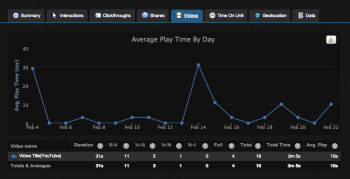
A snapshot of Flite's video component analytics.Video has, is, and will continue to be transformative to the online experience.

eMarketer projects that by 2014 nearly three-quarters of all US internet users will watch video online at least once per month. With rising viewership, video advertising spending will also increase on both desktop and mobile from $2.93 billion in 2012 to $8.04 billion in 2016. As the adoption rate for connected TVs, smartphones, tablets, and “phablets” rises, consumers are even more connected to brands than when sitting behind a desktop computer.

Having both of these marketing conditions in place is a marketers dream — to be able to take full advantage of digital video advertising and spend a majority of campaign budgets on video. But before you start spending all this money, plan effectively what your goals are and how to measure these goals.

Integrating Social Media in Display Ads

Social media has become the primary vehicle for brands and engaged consumers to communicate with one another online. Consumers have evolved beyond interacting with just their friends and top celebrities, and have grown accustomed to getting updates and meaningful notifications from brands they follow through Facebook Page updates, tweets, videos, and posts. Many also talk back to brands, and, even more commonly, talk about brands through earned media channels. The more a brand embraces these popular social media channels and works to strengthen interactions between it and its customers, the more it stands to gain from its growth in mind share as brand-affirming conversations spread virally.

As the media advertisers have at their disposal merge, the opportunities to integrate popular forms of online interaction into more traditional advertising campaigns continue to bloom. In response to the rise of the “second screen” (mobile/tablet/laptop as an accompaniment to a home television), savvy TV advertisers have begun promoting hashtags and other invitations for simultaneous online interaction in commercials.

March 21st Webinars: Data-driven B2B Advertising and Paid Media Publishing

Flite has two exciting webinars coming up soon, both on Thursday March 21st. We hope you'll join us!


Creating Effective Data-Driven B2B Ads

Co-host: DemandBase

Thursday, March 21, 2013

12:00 - 12:45 p.m. PDT

Flite will present at a DemandBase online conference as one of five webinar sessions about B2B marketing. The session will be led by Steve Klopf, SVP of Business Operations.

>> Sign up here


Paid-Media Publishing: The #1 Trend in Display Advertising

Co-host: In-House Agency Forum (IHAF)

Thursday, March 21, 2013

10:00 - 11:00 a.m. PDT

Flite CEO Will Price will speak about paid media publishing to an audience of in-house creatives. The event is free for IHAF members and $50 for non-members.

>> Sign up here

The Power of Simplicity

Why We Updated Our Core Values

Simplicity can be challenging. But it’s also incredibly important.

As we approach our 7th year in business, we learned this lesson for the umteenth time when we set out to refine our company vision into a single sentence — a true north.

Like so many companies, we know in our hearts that we work so hard because we’re doing something great. But how can we as a business explain this to others in a simple, memorable way? How can we galvanize new co-workers with our excitement, or inspire prospective customers with our vision?

Converged Media: Owned + Earned + Paid Media

Converged media, a relatively new term which, if not coined outright by him was at least popularized by Altimeter's Jeremiah Owyang (see his 2012 report), describes the integration of content and brand message across the three channels marketing has involvement in: owned media (corporate), earned media (typically social), and paid media (advertising).

Why it has become a popular buzzword and a concept marketers are increasingly embracing has to do with its effectiveness. Not only can marketers leverage branded content beyond just one channel, multiplying its value, they can make sure that their brand message and experience is uniform across all the channels that customers can consume, interact with, and be exposed to it.

Is There Horse Meat in Your Media? 5 Ways to Know.

Is there horse meat in your media?My guess is that many digital advertisers don’t have much transparency when it comes to their media inventory supply chain.  They know the vendors, they think they know the products, but instead of premium choice beef, they may be getting horse.

At Flite we see a lot of Internet traffic that is exposed to the ads built on our platform.  In most cases we see quality traffic -- especially when the ads are served by our publisher customers.  But, in some cases, we see strange things.  We see horse meat instead of beef.

Internet traffic can be fit into a marketing hierarchy -- with the highest quality traffic at the top and horse meat, or worse, at the bottom.  To figure out which is which answer the following questions.

Who are the people generating the traffic? 

Dear Media: Turn Off the Lights on Your Way Out - Guest Post by Robyn Peterson, Mashable

Source: Mashable.com

Ad dollars have been on the decline for years, and while they continue to shrink even now, media companies continue to believe in the strategy of belt-tightening, rather than rethinking the rules of the game.

But first, why are ad dollars shrinking? The main reason isn't what most folks think (programmatic advertising), but rather it's because more big fish have moved into the pond.

Five tech companies now control 68% of all online ad revenue. And it ain't gettin' better. By 2015, Facebook alone is expected to account for 20% of all online ads sold.

An Agile Approach to Building Display Ads

Agile marketing is an active, adaptive, and responsive approach that maximizes the ROI of your advertising and promotional efforts. It allows a marketing team to recognize nascent opportunities and respond quickly, iterate towards success with relatively little risk, and rely on measurable results to direct execution steps instead of on guessing and forecasting.

These principles can be readily adapted to building display ads, and they should be. Ads built on long development cycles might be irrelevant by the time they’re trafficked, and might unwisely place too many resource eggs in a speculative basket. Instead, a solid display ad strategy, and a small team empowered to experiment within a defined scope, can home in on success more quickly and at lower cost than with traditional ad build models.

1. Define your strategy.
Agile marketing depends on a well-developed strategy that sets the bounds for testing. Ask yourself these questions:

The Evolution of Assembling Newspaper Ads


Source: shebsi.wordpress.com

A lot has changed in the advertising industry since the mid-1990’s.

Back then, I ran the retail channel for Netscape and we sold software to retailers like Fry’s, Comp USA, Walmart, and Costco.

Most of our marketing spend went into newspaper ads such as major Sunday circulars or the daily, smaller circular. We supplied our content – product descriptions and pictures – to the retailers, who would assemble assets from dozens of vendors and manually tape them together, making sure that the various pictures and logos fit in the required ad dimensions.

Then they would hand everything off to the newspapers. That’s when the real magic would happen.