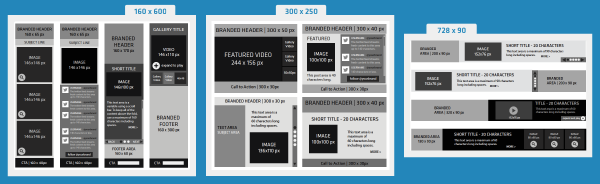
What are digital ad products?

Digital ad products are a framework for premium advertising used by publishers, networks, interactive agencies and media companies.

By creating products out of their services or ad inventory, companies create a model for repeatable business that is easy to sell and execute. 

Definition of “advertising product”: 

Ad products are defined by five characteristics:

  • the ad format and features
  • the creative within that format
  • the workflow behind producing the ad
  • the audience or placement of the ad
  • the metrics associated with the ad

Looking at all five of these areas gives an end-to-end representation of what kind of ad experience can be provided. This is then packaged into a sellable and scalable experience with consistent value to advertiser.

Ad products are often conceived to meet specific business objectives for advertisers. This may be to launch new products, generate sales, or cultivate brand awareness.

Typically executing a succesful ad products business requires collaboration between the sales, marketing, engineering and creative team members. 

Common elements of ad products:

Here are some areas that commonly differentiate ad products.
Fireside Chats with Starcom MediaVest Group and 24/7 Media

Before our all-star speakers took the stage at the 2013 Flite Customer Summit, we sat down with a few of them to talk about the future of digital advertising.

Check out our interviews with Lindsay Lichtenberg, Vice President of Publishing Platform and Partnerships at Starcom MediaVest Group, and Jonathan Tabak, VP of Ad Products at 24/7 Media.

The interviews touch upon the following questions:

  1. What are important trends in digital advertising this year?
  2. How does paid media publishing change the advertising industry?
  3. How is your team using paid media publishing?
  4. Why is real-time marketing important?
  5. How can publishers and brands stay relevant with consumers?

Where Moz got it wrong: It's not all about inbound

Popular marketing resource SEOmoz announced this morning a relaunch and rebrand of their site and products. Rand Fishkin, SEOmoz CEO — now just Moz — declared his company will "power the shift from interruption to inbound marketing.”

He wrote on their blog:

“We believe that in the next decade, the effort and dollars put toward web marketing will become more sophisticated, and growth in channels like SEO, social media marketing, content creation, etc. will dwarf the growth rates of those in more traditional, interruption-based endeavors.”

There is truth to this statement, that marketing is growing away from interruption; but that growth is not all toward inbound.

That Fishkin fails to note is that advertising is changing too, in sync quite closely with the values that Moz is positioned around. Outbound marketing is, in it’s own way, moving away from interrupt-based endeavors as well.

Thinking of interruption calls into mind images of annoying, disruptive display ads. Disruption is the old style of online advertising — where ads compete for your attention in any way possible.

But there is much more important type of disruption occurring in advertising today.

It’s the kind of disruption where companies are bucking the status quo, offering a new kind of advertising — one that entertains and informs audiences.


Delivering Content Marketing via Ads

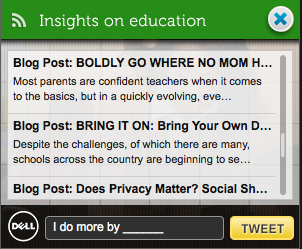
Today's display ads can be some of the most effective vehicles for content marketing. (See live ad below for interactive functionality.)Content marketing, in which advertisers create the sorts of digital content (articles, videos, infographics, etc.) that resonate with their target consumers, has been growing by leaps and bounds. Although its impact is more difficult to measure, the genuine utility and entertainment that content can provide strengthen the perception a consumer has of a brand.

The difficulty for many advertisers in extracting the full potential value of content marketing, however, is one of reach. Enticing consumers to opt in to owned media subscriptions (liking a Facebook page, subscribing to newsletters or RSS, following on Twitter) can only get you so far. Earned media has considerably fewer options to share content. Where does an interested advertiser find new, receptive consumers that could enjoy their brand content?

Digital advertising.

New Help Center Launches

Flite's product documentation now has a new home. We've updated help docs for Ad Studio 3 (for building, flighting, and measuring display ads) and Touch Ad Studio (for building, flighting, and measuring mobile ads), including thorough descriptions and information about settings options and metrics for all standard components.

We've also released a PDF manual for Report Studio that covers the interface, how to create basic reports, and how to use labels and label sets.

Finally, we've developed some preliminary documentation that covers the essentials of Component Studio. We'll be adding additional treatment on layer structures soon.

We will also be updating Console Help, as well as the product help docs as new components and functionality are added.

As always, please let your Media Services Manager or Customer Success Manager know if there's anything in particular you'd like for us to flesh out in the Help Center. We are always looking for opportunities to improve our customers' use of the Flite Platform.

How to Dynamically Update Your Display Ads

The idea of dynamically updating anything is pretty exciting. See what works or doesn't, fix it on the fly, and reap the rewards of your savviness? Sign me up.

But just because the technology is available to dynamically update ads, doesn't mean that you should jump in without preparation.

You can improve the likelihood of success by having a clear strategy for your campaigns, so that when they go live, the cross-functional team is on the same page about how and when to update ads in real-time. Here, we'll focus on dynamically updating the actual content in ad units, versus optimizing media placements.

Determine when to check in. If your campaign is running for 8 weeks, consider checking ad performance on a daily or weekly basis, depending on your available time. Checking more frequently could mean catching a trend and course-correcting early. However, if your cadence is too frequent, you may act when your sample size is too small to determine a correlation.

The ability to make updates is a blessing, so don't let it to turn into a burden — find a balance that works for your team.

12 Example Formats for Content-Rich Advertising

Last month I shared 8 ideas for content-rich ads, and I’d like to apologize. I shared some tips on what to do without giving any indication on how to do it.  

The concept behind content-rich advertising is that by providing entertaining and informative content right in your ads, you can interact with your audience directly on the page they are on, without forcing a click through.

One of the big challenges is how to fit content into the small real-estate of a display ad.

For instance, a lot of brands want to grow their social media following using paid media. The value of the content is already apparent in the social channels — so it’s just a matter of exposing an audience.

But for consumers, clicking through to a brand’s social site is too much to ask. They don’t like clicking on ads. And so by pulling your social content forward into paid media, you can demonstrate social value right there in the ad. If your audience likes what they see, they’ll reward you visits and follows.

Below you’ll see some example formats that feature a popular social post alongside a live social stream.

There are also examples of other types of content-rich ads, showing how to fit articles (or article snippets), recipes or image galleries into rich media in all the popular ad sizes.

Cross-screen Marketing and Advertising is Ready for a Boom

Business Insider just released a new report titled Why Cross-Screen Marketing Will Be a Game-Changer for the Mobile Industry. The report is just the latest indication that cross-screen marketing is ready for a boom.

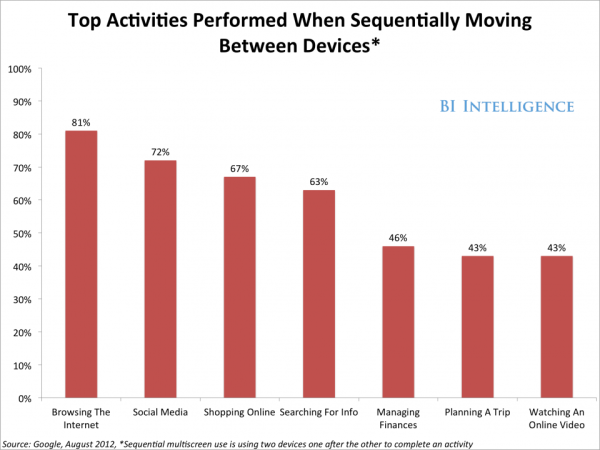
The news that mobile is on the rise is by no means new, but what is new is the growing number of consumers who switch from screen to screen when completing a task — for instance 67% of consumers shop online on two or more devices.

“We already habitually move across four screens (TV, PC/Laptop, Tablet, Phone), and there may be another screen on the way in the form of smart eyewear or wrist wear.”

With consumers interacting with media and services across so many devices, marketers can reach them in a way that is just as varied or expansive.

“Audiences are increasingly becoming digitally agnostic. This means they are willing to consume the same content — perhaps presented in different manners — across screens.”

This report echos David Jones from Shazam, who on our blog earlier this year pointed to the growth of the “second screen” during TV viewing as a major opportunity for marketers to use mobile retargeting and TV companion apps:

When you look at these findings together, you have more than a trend – you have a tidal wave that points to mobile devices – both phone and tablet – as the ideal candidate to revolutionize a new category called “media engagement.”

Two Methods For Brand Managers To Analyze Campaign Performance

Source: blog.bufferapp.com

The amount of data that can be tracked online is overwhelming.

If we focus purely on rich-media display advertising, there are a slew of metrics you can track. These include video play times, interaction rates, tab clicks, scrolls, hovers, and the list goes on.

Assuming that your sources of data are accurate, the amount of data isn't an issue.

The issue is 1) deriving insights from an overwhelming amount of information and 2) deciding how to apply those insights to your business right now.

Why are these issues important to consider?

As a brand manager, you probably have a packed schedule. You're the hub of the wheel. One minute, you're approving creative from the graphic designers, and the next, you're forecasting sales numbers or determining the ideal dates for a product promotion.

5 Tips for Writing Everyday Emails that Work

In marketing and sales, we agonize over what to email our prospects. But strangely, we spend almost no time at all thinking about our day-to-day emails with our own co-workers and teams.

You constantly have to convey your ideas internally, and getting it right is just as important as selling them externally, if not more-so.

It's not only your company's reputation, but your personal brand that gets showcased every time you hit the "send" button. Here are 5 things you can do to be even more successful with your day-to-day communications.


Mirror the recipient’s style 

Of the people I email with on a regular basis, there is a wide range of styles.

Sometimes I receive emails where the subject line is the entire message, and body is blank.

On the other end, I’ve had co-workers who provide a lot of backstory to how decisions are being made, and solicit a lot of feedback.

A good process to follow is to mirror the complexity and length of the emails you receive. When you match someone's style and pace, you are much more likely to get the type of response you are looking for.

Why A Major News Site Is Ignoring the IAB's Guidelines

The Newsweek Daily Beast Company launched a new site makeover for Newsweek.com on Wednesday, and it looks more like a sleek Tumblr blog than a stodgy print paper.

The aesthetic is clean, bright, and sparse. The look and feel was partially inspired by The New York TImes' multimedia story “Snow Fall” that caught audiences and publishers by surprise with the immersive experience. In an ambitious move, Newsweek plans to do the same — on a weekly basis.

Notice anything else about the site? That's right — there are no display ads. For now, at least.

Native Advertising vs Advertorials

Project GutenbergAlthough native ads are indisputably one of the hottest trends in digital advertising, the concept is new enough that an agreed-upon definition has not been settled on yet. And some elements of the approach, specifically its focus on content and the way it is embedded in site content, has led some to confuse them with the much-maligned advertorial. Ambiguity around the term has led at least one prominent blogger to decry the approach, and even at the IAB Annual Leadership Summit, advertising execs, for the most part, claimed it represented nothing new.

But what really is the difference? There are some similarities, and also some clear points of difference.

Similarities

Both native advertising and advertorials are placed within the context of where site content is consumed. Instead of being relegated to the periphery of a Web page, such as within the navigation sidebars or above content, both native ads and advertorials appear within the natural flow of content consumption on the site.

Flite ebooks: Agile Marketing and Paid Media Publishing

At Flite, we pride ourselves in embracing the marketing techniques that our Platform enables for our clients. Agile marketing, in which advertisers make small, timely bets to home in on responsive, optimized success, and paid media publishing, which melds the effectiveness of compelling, user-focused content and the scale of paid media, have been distilled into two ebooks authored by the Flite staff. Both ebooks detail the ways in which these approaches are revolutionizing display and mobile advertising.

The Ultimate Guide to Agile Marketing in Display Ads covers:

  • agile marketing basics, and how they apply to the development of display campaigns
  • how a digital advertising team needs to be structured for agility
  • how news and changes present high-ROI opportunities to agile marketers
  • real-world examples of start-ups' and Fortune 500 companies' successful use of agile techniques in their approach to display ads

The Essential Guide to Paid Media Publishing: Scaling Content Marketing into Display Advertising explores:

  • what paid media publishing is, and how it extends your content marketing efforts
  • how compelling content developed for owned media can be streamed into paid placements
  • what kinds of content can be pulled into display advertising, and how new technology is enabling their real-time distribution
  • case studies with performance details, as well as ad format examples

Both ebooks are available as PDFs for easy reading on your computer or mobile device.

Top advice from Starcom, Condé Nast, Wikia, 24/7 Media, CBS Interactive & Mashable at Flite Summit 2013


The Flite Summit was a smashing success yesterday! We had over double the number of attendees from the previous year and we're recapping the event for those who couldn't make it.

There were themes among the presentations from our all-star speaker lineup, including executives from Starcom MediaVest, Conde Nast, Mashable, 24/7 Media, Wikia and CBS Interactive.

Here are some recurring terms that came up throughout the day and quotes from the speakers on a variety of salient topics:

Native Ads vs Banner Ads

Native advertising, which integrates the hosting site’s style, tone, and content focus into an ad format, stands in stark contrast to the traditional banner ad, which, if anything, tries very hard to stand out. Because of their touted ability to provide a congruent experience for users, native ads avoid the scourge of ad blindness and are more likely to create a more favorable impression on users. Are these assumptions true?

According to a study spearheaded by IPG Media Lab and Sharethrough, native advertising outperforms banner advertising in all measured metrics...but one. However, the definitions of native and banner ads used for the purposes of the study might be up for contention: the native ad is contextually embedded, while the banner is relegated to the right rail of the page. It's unclear how much of an impact position alone had on the results.

Credit: SharethroughThe study, which polled 4,770 Web users, and also additionally eyeball-tracked 200 participants, compared users’ response to and interaction with native ads (contextually positioned, and with content) vs both banner ads (a medium rectangle positioned in the right rail) and site content. The difference in position raises questions about the results, at least in my mind. Would a banner placed in the flow of site content perform better than the study’s results indicate?

At any rate, here are the results:

Combining Real-time and Native Advertising

Publishers such as Forbes and The Huffington Post are turning towards real-time "newsrooms."

What do you get when you take the expertise of a top global integrated brand agency and combine it with one of the most highly-trafficked news sites on the web?

Real-time native advertising.  As of this week, The Huffington Post and Digitas have entered into a new partnership which will allow Digitas clients to quickly post content on The Huffington Post homepage.

Why Clickthrough is a Terrible Engagement KPI

Dwell on Branding Research Report, April 2010 (Microsoft Advertising)

Clickthrough used to be king. Now it's barely a squire.

Display advertising is about delivering value to a brand, whether it means increasing awareness or perception, or nudging consumers further along the purchase funnel. However, the predominant metric in digital advertising continues to be clickthrough rate (CTR), even though it's an unimportant measure of a display ad's effectiveness.

Come again?

I'll repeat: CTR is an unimportant measure of a display ad's effectiveness.

This isn't a matter of opinion.

  1. Only a small segment of the overall online audience actually clicks on display ads. According to a comScore study, 8% of Internet users account for 85% of all display ad clicks, and 72% are uncomfortable clicking on ads altogether. By measuring clicks, you ignore the impact an ad has on almost three-quarters of your audience.

What Does A Paid Media Publishing Ad Look Like?


1. Stream-based marketing

Engage your audience in real-time with social feeds, streaming videos, curated news, or anything in your existing content management system (CMS).

Brands are finding it increasingly important to curate content as well as to produce it from scratch. By pulling the best, most up-to-date content from all over the web, you can turn your display ad into a dynamic "container" of content for your user instead of a static piece of imagery and text.