Photography & Fashion Ads: How Color, Location, & Models Change an Ad’s Message

Photography & Fashion Ads: How Color, Location, & Models Change an Ad’s Message

What is the first thing you see when you look at an ad for a fashion brand? Is it the model, clothes, or background?

When it comes to photography, artistic aspects such as position, coloring, background, and lighting have strong influences on how the consumer sees an ad. To attract a consumer, an advertiser might alter the photo’s lighting, saturate it with brighter colors, or position her model underneath the Eiffel Tower. A good photo will catch a consumer’s eye, but a great photo will make a lasting impact on a consumer.

In the following examples, fashion brands chose specific arrangements to display their products. Here are three things to consider when evaluating a photo for potential use in an ad.

Read More

Why Music Makes Your Ad More Attractive, Effective, and Interesting

Why Music Makes Your Ad More Attractive, Effective, and Interesting

According to David Huron in "Music in Advertising: An Analytic Paradigm" (Musical Quarterly, Vol. 73, No. 4 [1989] pp. 557-574), the purposes of music in ads are to engage a listener’s attention and to make the advertising message less of an unwanted intrusion. However, marketers and advertisers have realized that what we hear in ads is more important than just these purposes.

A particular song or soundtrack can be a big game changer for what consumers associate with a brand. Whether rocking, inspirational, or sentimental, music can change an ad’s mood and the way consumers absorb them.


Read More

25 Fascinating Stats on Native Advertising

25 Fascinating Stats on Native Advertising

With “60% of consumers not remembering the last display ad they saw” (Online Media Daily), advertisers are turning to alternate ad forms to counter consumer blindness. Leading this digital ad revolution are sites such as BuzzFeed, Mashable, and The Awl that engage their users with ads that fit within the natural flow of the site - native advertising - rather than attempting to do so with increasingly ignored banner ads.

With a similar look and feel to a website’s page, native ads offer advertisers the opportunity to engage users with brand content in a friendly and non-interruptive manner, raising brand awareness through visual attention.

As the world of digital marketing adapts to users’ preferences, native advertising delivers interaction and engagement through content-rich ads embedded users’ typical site consumption experience rather than through a click to landing page.

Here are 25 statistics that explain how and why native advertising is rapidly becoming one of the most popular digital advertising approaches.

Read More

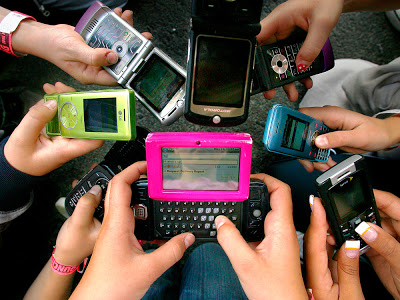
3 Things Marketers Can Learn From Teenagers

3 Things Marketers Can Learn From Teenagers

When I log on to my Twitter and look at my homepage, one person’s posts always turn up every hour: my 15 year-old cousin’s.

Statistics have shown that the average daily media exposure for 8-18 year olds is 10 hours and 45 minutes. With 81% of teenagers using social networking sites, I am impressed with how well teenagers keep their content fresh. My cousin’s tweets are different from her Facebook updates, which are different from her Instagram and Pinterest ones. How does she find this much content to share?

As a teenager posts on social networking sites, there are three things that stand out to me - being unique, showing emotion, and agility. With little restraint and a lot of personalization, teenagers are limitless to the content they produce. The marketing world could learn a few key points about marketing from teenagers. Consider these three.

Read More

20 Things You Didn't Know about Programmatic Buying

20 Things You Didn't Know about Programmatic Buying

Will automated systems replace traditional ad-buying methods?

Programmatic buying has revealed to advertisers a new way of buying and selling digital ads. Through demand-side platforms (DSPs) and real-time bidding (RTB), marketers buy and sell desktop display, video, Facebook Exchange (FBX), and mobile ads using automated technology. These automated systems have allowed marketers to buy media in response to real-time customer action through algorithms employing a complex set of rules, usually at lower cost and higher agility than with traditional ad-buying methods. Although many publishers and media buyers are still wary of this method mostly due to its lack of information and control, the utilization of programmatic buying has continued to increase.

Here are 20 statistics that present programmatic buying as an increasing power in the digital ad-buying market.

1. Programmatic Buying tripled from 2011 to 2012 with exchanges increasing by 25% and demand-side platforms (DSPs) increasing by 21%. (eMarketer)


Read More

25 Stats About IAB Rising Star Ad Units

25 Stats About IAB Rising Star Ad Units

You are more likely to climb and summit Mount Everest than click on a banner ad (Solve Media via Business Insider). But you’re more likely to engage with an IAB Rising Stars ad than reach the peak of Mount Everest.

As the internet delivers the fastest growing arena for advertising, brands are challenged to experiment with ways to catch consumers’ attention online. Although dated formats receive poor user engagement, others, such as those with rich content and interactivity, are far more successful at enticing users to engage. Publishers proliferated a wide range of innovative, larger-footprint ads to keep engagement up, and eventually the IAB created standards for a new wave of larger, interactive units titled “Rising Stars”.

Here are 25 IAB Rising Star statistics that shed light on how these eleven units (six display and five mobile) are being adopted in the industry:

1. 69% of agencies have heard of IAB Rising Stars. (Undertone)


Read More

How Fictional Characters Successfully Market Their Brand

How Fictional Characters Successfully Market Their Brand

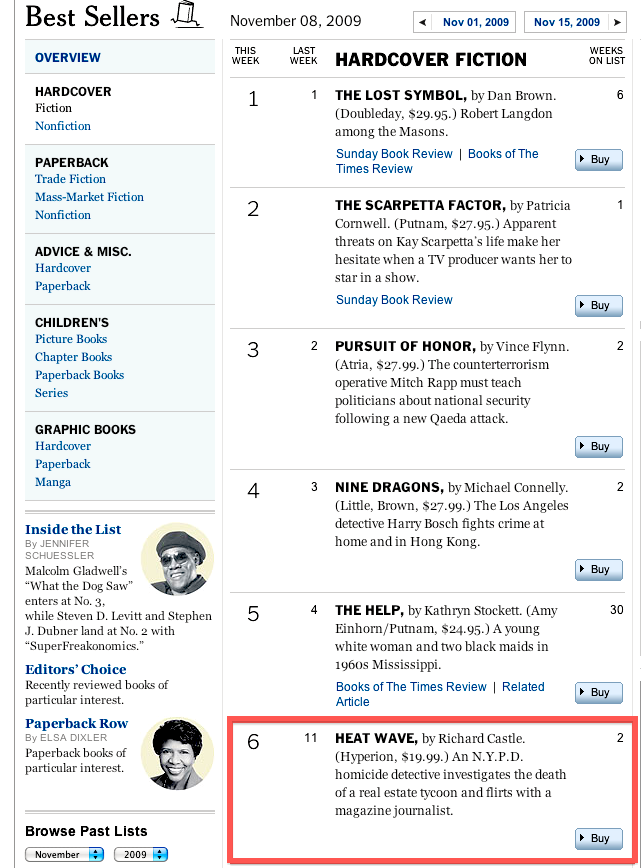
Richard Castle is a New York Times bestselling author of mystery novels. His novel Heat Wave debuted at #26 in 2009 and moved up to the sixth slot in its fourth week. In 2011, Heat Rises debuted at #1. The most impressive part of his literary success: Richard Castle is a fictional character.

Richard Castle is the protagonist on ABC’s television series, Castle. He is a writer that shadows a beautiful and tough NYPD detective, Kate Beckett, for writing inspiration. While working with her, Castle writes a series of mystery novels named after their protagonist, Nikki Heat, based on Detective Beckett and the crimes they encounter.

How did Richard Castle, a fictional character, become a significant marketing tool for ABC’s television series, Castle?

1. Using A Fictional Character To Market Across Mixed Media

Would you like to own the Wilson volleyball from Cast Away, or eat a box of Bertie Bott’s “Every Flavour Beans” from Harry Potter?

When several companies collaborate, the impossible is achieved. After the huge hit of Harry Potter books and films, Warner Bros. linked with Jelly Belly to create Bertie Bott’s “Every Flavour Beans” to targeting a massive fan base of Harry Potter fans.  

Read More

4 Lessons about Marketing from Charlie and the Chocolate Factory

4 Lessons about Marketing from Charlie and the Chocolate Factory

Willy  Wonka imbued his chocolates with fun, innovative, and magical peculiarities, delighting both children and adults around the  world. His chocolate world evoked the world of imagination and  wonder: little orange men called Oompa-Loompas, geese that lay  chocolate eggs, and chocolate bars that could be delivered via television.

But Wonka was not only a master innovator. He was a brilliant marketer. Here are four marketing lessons we can learn from the peculiar yet indubitably memorable Willy Wonka.

Read More