Injecting Rich Media with Content - Guest Post by Michael Goldberg, Martini Media

Injecting Rich Media with Content - Guest Post by Michael Goldberg, Martini Media

Why Brands Should Align Messaging with Content

With consumer engagement at a premium, it's been a battle for marketers to win a user’s undivided attention. Perhaps that’s because advertisers have been overly focused on selling vs. engaging. 

Consumers are not looking for the next great sales pitch, they are looking to be informed and entertained. By aligning brand messaging with relevant and compelling content, you are giving them the type of material that encourages them to read and share.

Read More

What Display Advertisers Can Learn from Content Marketing

What Display Advertisers Can Learn from Content Marketing

Some of the best marketing ideas today are about content marketing.

Through content, marketers provide value to consumers, and hopefully get their business as well. It’s something everyone can feel good about.

But it’s popular for content marketers to disparage online advertising these days.

There is this thinking that advertising and content marketing are disparate ideas — standing in polar opposition to each other — as if inbound, value-driven content, and outbound advertising don’t mix well.

The idea that ads online have to cater to a kind of attention deficit theatre is something we’ve artificially imposed upon ourselves.

Read More

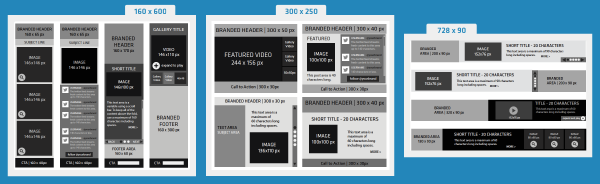
12 Example Formats for Content-Rich Advertising

Last month I shared 8 ideas for content-rich ads, and I’d like to apologize. I shared some tips on what to do without giving any indication on how to do it.  

The concept behind content-rich advertising is that by providing entertaining and informative content right in your ads, you can interact with your audience directly on the page they are on, without forcing a click through.

One of the big challenges is how to fit content into the small real-estate of a display ad.

For instance, a lot of brands want to grow their social media following using paid media. The value of the content is already apparent in the social channels — so it’s just a matter of exposing an audience.

But for consumers, clicking through to a brand’s social site is too much to ask. They don’t like clicking on ads. And so by pulling your social content forward into paid media, you can demonstrate social value right there in the ad. If your audience likes what they see, they’ll reward you visits and follows.

Below you’ll see some example formats that feature a popular social post alongside a live social stream.

There are also examples of other types of content-rich ads, showing how to fit articles (or article snippets), recipes or image galleries into rich media in all the popular ad sizes.

Read More

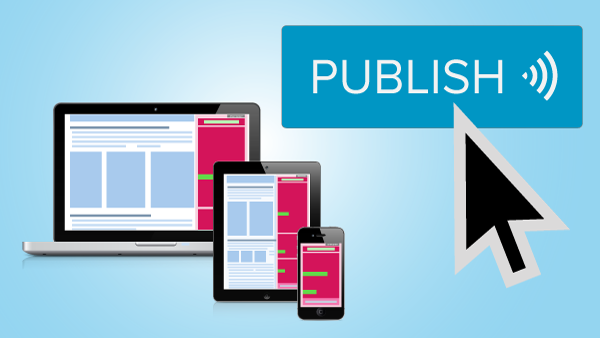
3 Reasons to Publish to Your Paid Media

You can update your company’s blog or Facebook page with a few clicks. It happens all the time.

You can also update your company's ads almost as easily. That's because ads aren't files anymore; they're tags — dynamic creative containers. Yet publishing new ad content happens a lot less often. Why is that?

Although ad platforms have given advertisers direct access to be able to modify ads at any time without ever being locked-in to a specific creative, few companies make use of this amazing opportunity. We're still stuck thinking of ad tags like the static files which they replaced.

The future of online advertising is not static though. It's quite the opposite. Think for a minute — when was the last time you looked at something old online?

Below are the three ways brands can improve ad performance by publishing to paid media. Each strategy builds upon the one before, so I've listed them from least to most complex.

So, why are companies embracing paid media publishing?

Read More

Don’t Tell Me You Don’t Have Enough Content

This dog needs more content.

At Flite we believe that content-rich ads have value.

Value for audiences because they entertain and inform. Value for advertisers because they get results. And value for publishers because doing the above provides an opportunity to grow ad revenue.

Yet a common complaint I hear from publishers is that their advertisers don’t have enough content for content-rich ads – that it’s hard to get extra brand assets.

Brands DO want to tell a more sophisticated story on top publisher sites. They believe in content marketing.

But their ad campaigns are planned around the remnant inventory bought through exchanges. They’re armed to the teeth with swfs. They claim they don’t have extra videos or piles of branded images lying around for a photo gallery.

Or maybe there are brand assets out there, but they’re not approved.

So somehow, we’re surprisingly light on content for ads.

But we’re looking in all the wrong places.

Read More

Great isn’t good enough. You have to make it memorable.

When was the last time you read a “Top 10 tips” or “5 ways to” post? I mean read it, not skimmed it. If you’re like me, you probably give them a cursory glance to confirm that your opinions are shared by other experts, and then go on to the next thing.

AJ Kohn discussed this in his excellent post this week 124 Reasons This Post Could Save the Internet in 7 Seconds. Kohn’s article isn’t exactly about what the tongue-in-cheek title asserts; It’s actually a fabulously-written reminder about the importance of content-recall in our culture of content overload.

Kohn says it’s not enough to create great content, or noticeable content. You have to create memorable content.

To take his ideas one step further, I assert that content-driven display ads have a lot to learn from other areas of marketing where content creation has traditionally played a larger role. When display ads then work in tandem with owned and earned media, memorable content strategically binds the narrative together, which keeps messaging consistent across all digital touch-points.

So let’s apply some of Kohn’s ideas to display advertising.

Read More

Play to Where Your Audience is Going to Be -- Guest Post by Brian Wilhite, Virtual Fan Network

Where your audience is going to beRows of Seats - Photo by Turba 

Flite's Guest Blogger series features the industry's top thought-leaders to share insights on display advertising, agile marketing, and innovation.

Brian Wilhite is the CEO and founder of Virtual Fan Network / VFN Zone, a digital sports marketing platform that connects athletes, fans, brands, and publishers with engaging experiences. 

---

In the current digital world, it is now possible to reach millions of people quickly and efficiently.  A message or a piece of content can instantly be broadcast across any number of social channels. 

With this ability, the power and influence previously held by the traditional broadcast networks has shifted to the content creator.  Based on the trends of the last few years, I do not expect this to reverse course. The impact of this power shift will affect the way content is used by consumers, broadcasters, owners and creators.

In the past, people were forced to go to a specific broadcast network’s channel to tune in, at a possibly inconvenient time. Now they are able to be entertained directly from the content creator.  By simply choosing to “follow” or “Like” their favorite entertainer or sports hero, the consumer is instantly entertained through their favorite social channel, their consumer devices, and at anytime or place.

It's important to think about how this affects advertising efforts, especially when you can no longer reach the broadcast audience. The audience is a moving target, and becoming increasingly difficult to hit.

Read More

5 Trends That Will Change Marketing Forever

Slide 14 from The Menu: What Excites us for 2012

AdAge.com featured an article last week penned by Darren Herman of The Media Kitchen titled Meet the Five Big Trends Changing Marketing. Peppered throughout Heman's article one theme keeps rising to the top -- Devices. Here’s the abridged version of what Herman had to say:


Communication across many social platforms will be seamless.

We're starting to see the emergence of technology providers that make it easier to not just maintain and create workflow solutions across these social platforms, but also launch media-driven campaigns.


Location will play an increasingly important role for targeting.

With the proliferation of mobile devices including phones and tablets, we are seeing an increasingly amount of digital media inventory tagged with location data (latitude and longitude).”


Cross-platform plans will be driven by data. 

Read More